
Half of Men Would Use an AI Girlfriend Just to Have Someone to Talk To (New Survey)
A survey of 2,150 U.S. adults finds loneliness, not sex, is the main draw of AI companion apps. The harder question for your dating life is what renting a conversation that never pushes back does to the one skill dating still rewards.

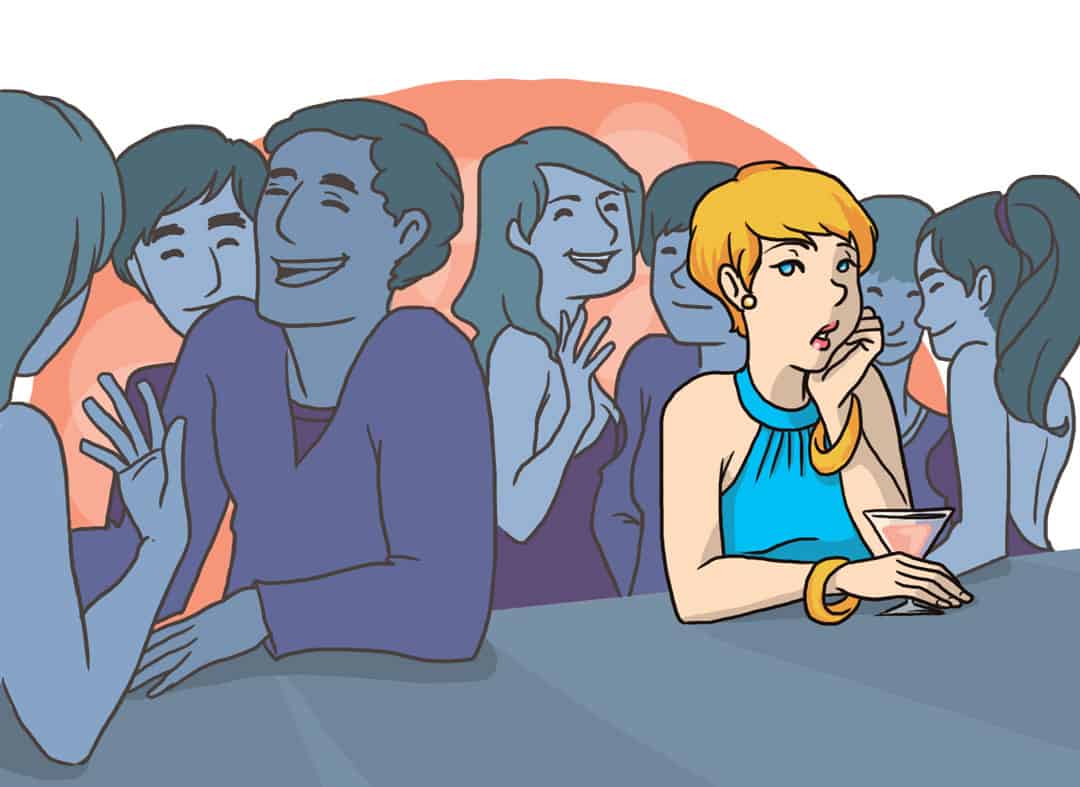
Say the words “AI girlfriend” and a picture forms instantly: a guy alone in a dark room, typing things he would never say to a real woman, motivated by virtual sex or by having given up on dating altogether. A new survey suggests the picture is mostly wrong.
Asked what would be their main reason for using an AI girlfriend, 51.7% of the men in a new survey of 2,150 U.S. adults chose having someone to talk to or feeling less lonely. Only 16% chose affection, romance, or sexual interaction. Men were more than three times as likely to name conversation as sex.
The finding comes from The State of AI Romance 2026, a study by AI Girlfriend Coach, a review site that tracks more than 75 AI companion platforms. It surveyed U.S. adults through SurveyMonkey Audience on August 26–27, 2026, and included 1,709 responses after screening out a cluster of bot-pattern answers.
The result surprised the researcher who ran it. “I walked in assuming this was a sex product with a chat feature,” said Ranji Mercado, who has tested 16 of these apps extensively over the past year. “The men who answered the survey did not describe it that way at all.”
The main reason people would use an AI companion
Share of respondents selecting each motive as the primary reason. State of AI Romance 2026, n = 1,709 U.S. adults.
Someone to talk to / feeling less lonely
Affection, romance, or sexual interaction
The apps sell bodies. Men say they are buying availability.
There is an obvious contradiction in the data. These products are marketed as romance. Open almost any AI girlfriend app and the first thing you do is choose a face and a body, before a single word has been exchanged. The characters are built to be attractive, the flirting escalates if you let it, and the generated images are usually what sits behind the paywall.
What the apps sell vs. what men say they are buying
The marketing
- Character creator first: pick her face, her body, her outfit
- Flirting that escalates as the user engages
- Generated images behind the subscription paywall
- Ads built on attraction and availability-as-fantasy
The stated demand
- 51.7% of men: someone to talk to, less loneliness
- Someone who answers at 2 AM
- A conversation with no judgment and no rejection
- Never feeling like a burden for reaching out
Consider what these apps offer that a human relationship, and even a friendship, cannot. They are available at 2 AM. There is no wondering whether you are bothering someone, no first message to agonize over, no read receipt sitting unanswered for six hours, no being ghosted after a conversation that seemed to be going well. You never have to perform being interesting. And unlike scrolling Instagram or putting on another episode at midnight, it talks back.
Mercado said the availability, not the flirting, is what stayed with him after a year of testing. “The flirting is usually generic and the images are a business model more than a relationship. What sticks is that it responds to you, specifically, and it is always there,” he said. “A bot that will say anything gets old in days. A bot that remembers your brother’s name and asks about the job interview does not.”
Why “girlfriend” is the label men can say
One explanation for the gap between the label and the use: the label does a job the user cannot do for himself. A man rarely downloads an app because he has thought, clearly, “I am lonely and I need emotional support.” That sentence is difficult to say out loud, even privately. “AI girlfriend” is a phrase he can say. It sounds like a curiosity, or a laugh, or at worst a bit of fun. What he actually does once inside the app, talking about his day, complaining about work, mentioning something he has never found the right person to tell, is a different matter, and the survey suggests it is closer to the real appeal.
For men who have plenty of people to grab a drink with and almost nobody to actually talk to, that explains more than any romantic feature does. It is a conversation where you cannot lose.
The counterweight: a gap, not a plan
The sensational version of this story, that AI girlfriends are replacing real ones, is not supported by the survey. Nearly two thirds of respondents, 64.6%, said an AI could never replace a human relationship. The men citing loneliness were describing a gap in their lives, not a plan to fill it permanently with a machine.
But a meaningful minority is not so sure where their own boundary sits. Among men, 34.5% were at least open to developing genuine romantic feelings for an AI: 9.3% said outright they thought they could, and 25.2% said maybe, if the AI became realistic enough. A quarter of men surveyed are saying that if the technology gets convincing, they are no longer certain of their own emotional line.
The State of AI Romance 2026, key numbers
n = 1,709 U.S. adults after quality screening. Survey by AI Girlfriend Coach via SurveyMonkey Audience, Aug 26–27, 2026.
| Finding | Result |
|---|---|
| Main reason to use an AI companion: conversation or loneliness (all adults) | 56.6% |
| Main reason: affection, romance, or sex (all adults) | 10.3% |
| Same two motives, men | 51.7% vs. 16% |
| Men at least open to genuine feelings for an AI | 34.5% |
| Who said “maybe, if AI became realistic enough” | 25.2% |
| Who said AI could never replace a human relationship | 64.6% |
| Who call a partner’s AI romance cheating | 50.5% |
| Not cheating, but still uncomfortable with it | 21.2% |
| Open to AI feelings who call it cheating, vs. those who say they never could | 73.0% vs. 41.2% |
| Would consider an AI companion: Millennials vs. Gen Z | 44.7% vs. 12.5% |
What a conversation without friction trains out of you
None of the above makes these apps harmless. This is where the story stops being a curiosity about an app category and becomes a dating problem, because other research published this year describes what happens to people who get used to conversation with the risk removed.
The Wheatley Institute at Brigham Young University and the Institute for Family Studies surveyed 2,431 U.S. adults aged 18–30 who are dating, engaged, or married for a May 2026 study called Secret Soulmates. About one in seven, roughly 15%, reported regularly interacting with an AI romantic companion. Among those users, roughly two thirds said it was easier to talk about their feelings or be themselves with the chatbot than with real people. That is the appeal working exactly as designed, and it is also the mechanism that worries researchers.
The mechanism therapists and researchers describe
Each step is anchored to a named source. The BYU links are correlational; the pattern is what researchers say they observe, not a proven causal sequence.
Among young adults who regularly use an AI romantic companion
Secret Soulmates, BYU Wheatley Institute / Institute for Family Studies, n = 2,431 U.S. adults aged 18–30 who are dating, engaged, or married.
The therapists Newsweek interviewed this summer describe the same mechanism from the couch side. “AI partners can feel easier because they give people a sense of connection without the same fear of rejection,” said Dr. Michael Salas of Vantage Point Counseling, whose own research found that 28.16% of U.S. adults say they have had at least one intimate or romantic relationship with an AI. Alexandra Cromer, a licensed professional counselor with Thriveworks, put the risk in competitive terms: “Forcing potential human partners to compete with technology that’s highly tailored and structured will always be a doomed outcome.”
“What I’d watch is a generation and a workforce getting fluent in relationships that demand nothing, then struggling with the ones that demand everything.” Rachel Driscoll, in-house therapist at Ever Accountable and former Match employee, quoted in Newsweek
The pattern also starts younger than the survey’s adult sample suggests. Fortune reported in April that teen and Gen Alpha boys are choosing AI girlfriends for “maximum control, zero rejection,” with experts warning the habit could erode social skills badly enough to affect employability. The 51.7% of grown men citing loneliness may be the mildest version of a cohort effect that is already underway.
The generation nobody expected
The survey contains one demographic result that breaks the usual narrative. Gen Z, the cohort that grew up with smartphones, turned out to be the least interested group in the sample: 12.5% of 18–29-year-olds said they would consider using an AI companion. Among Millennials, the figure was 44.7%, more than three times higher. The popular image of AI romance as a young person’s habit does not match this data. In this sample, openness to AI companionship peaks in early middle age.
Would consider using an AI companion, by generation
State of AI Romance 2026.
The line: practice vs. replacement
Here is the question the reader actually has: does talking to an AI make you better or worse with real women? The honest answer is that nobody has run the controlled experiment, the available data is correlational, and the effect probably depends on what the app replaces in your life. That makes this less a verdict than a self-audit. The difference between using an AI as a low-stakes warm-up and using it as a substitute shows up in specific, observable behaviors.
Is the app practice, or is it replacement?
Four self-tests. Each one maps to a behavior the research associates with the risk side of the ledger.
If the checks come back clean, the survey is mostly telling you something about male loneliness, and the app is a symptom. If they come back warm, the fix is not necessarily deleting the app tomorrow. It is restoring the reps: one real conversation about something actual per week, one approach or message you would normally skip, one evening where the phone stays in the other room. The survey’s own number is the argument. Half of men say what they are missing is someone to talk to. The subscription version of that is a workaround. The real version is a skill.
The skill being rented is the one that still pays
There is a final twist, from the largest study of American singles, released four days before this article. The 15th annual Singles in America study from Match and the Kinsey Institute found that 49% of singles have fallen for someone they were not initially attracted to. The top reason, cited by 47%, was great conversation.
Put the two studies next to each other and the position of the man who can hold a real conversation gets stronger, not weaker. Machines just made agreeable, available, perfectly patient talk nearly free, which means the human version, the kind with pauses, misfires, and the risk of being boring, is about to get rarer as a lived skill. Scarcity is what creates value in every other market. Men who keep practicing conversation on people, where it costs something, will hold the scarcest asset on the dating market of the next decade.
Half of men in a large survey said the main thing an AI girlfriend would give them is someone to talk to. The product succeeds because it always answers, never judges, and never makes them feel like a burden. All true, and none of it is a girlfriend. The uncomfortable part of this survey is not what it says about artificial intelligence. It is how low the bar turns out to be for what men say they are missing, and how expensive it has apparently become to get it from another person.
Sources and methodology
- The State of AI Romance 2026, AI Girlfriend Coach, syndicated via MensXP, September 2026. Survey of 2,150 U.S. adults via SurveyMonkey Audience, Aug 26–27, 2026; 1,709 responses after excluding 441 bot-pattern responses (98% from Android devices, median completion 39 seconds). Caveats: the survey was run by a site that reviews and profits from coverage of AI companion apps; it measures stated attitudes, not behavior, on an opt-in panel, in one country, at one moment.
- Survey press release with methodology detail, openPR, September 3, 2026.
- “Secret Soulmates: How AI Romantic Companions Are Impacting Real-Life Romantic Relationships in Young Adulthood,” Wheatley Institute at Brigham Young University and the Institute for Family Studies, covered by KSL, May 19, 2026. n = 2,431 U.S. adults aged 18–30. Findings are correlational.
- “AI Girlfriends Are Already Making the Dating Scene Harder, Therapists Warn,” Newsweek, Suzanne Blake, June 16, 2026, including Vantage Point Counseling’s finding that 28.16% of U.S. adults report at least one intimate or romantic relationship with an AI.
- 15th annual Singles in America study, Match and the Kinsey Institute, released September 10, 2026.
All percentages are as reported by the cited sources. Where figures are approximate (marked ~), they paraphrase “about two thirds” or “about half” language from the BYU study coverage.