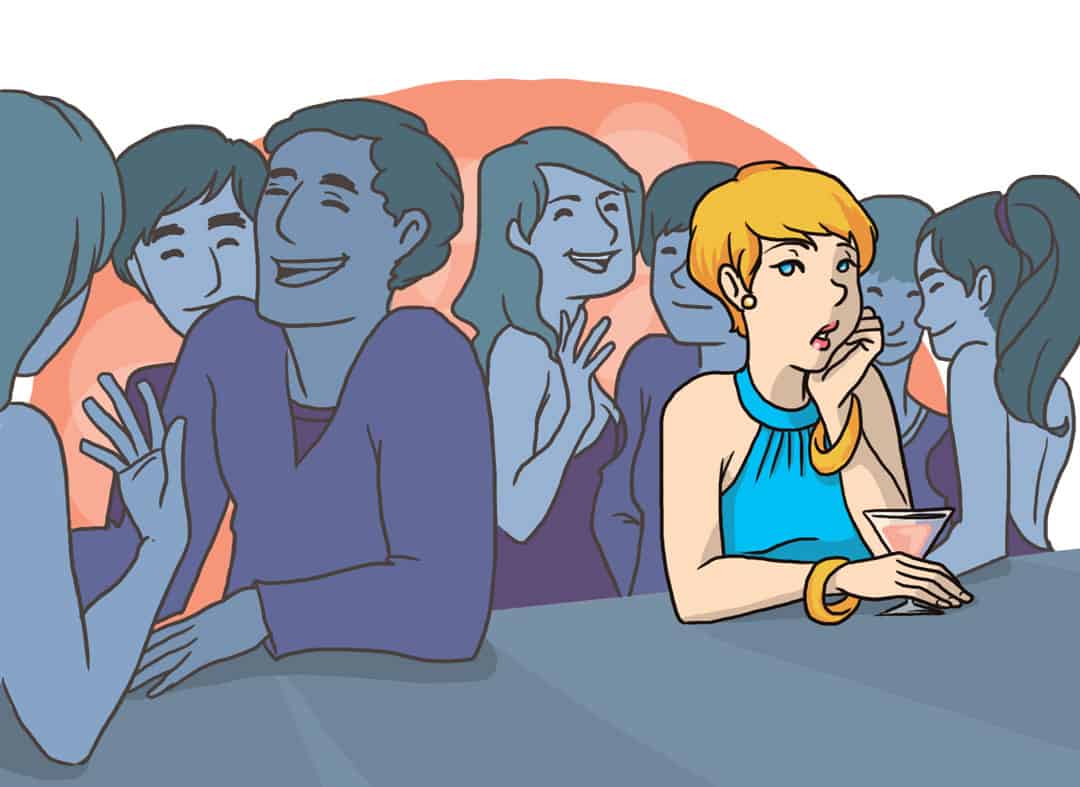

Bumble Just Let Men Message First. Here’s the Science of the New Opening Move
The app scrapped its signature rule and gave every match one opening message and 72 hours. Conversation research says that single message now decides more than ever. Here is what actually gets a reply.
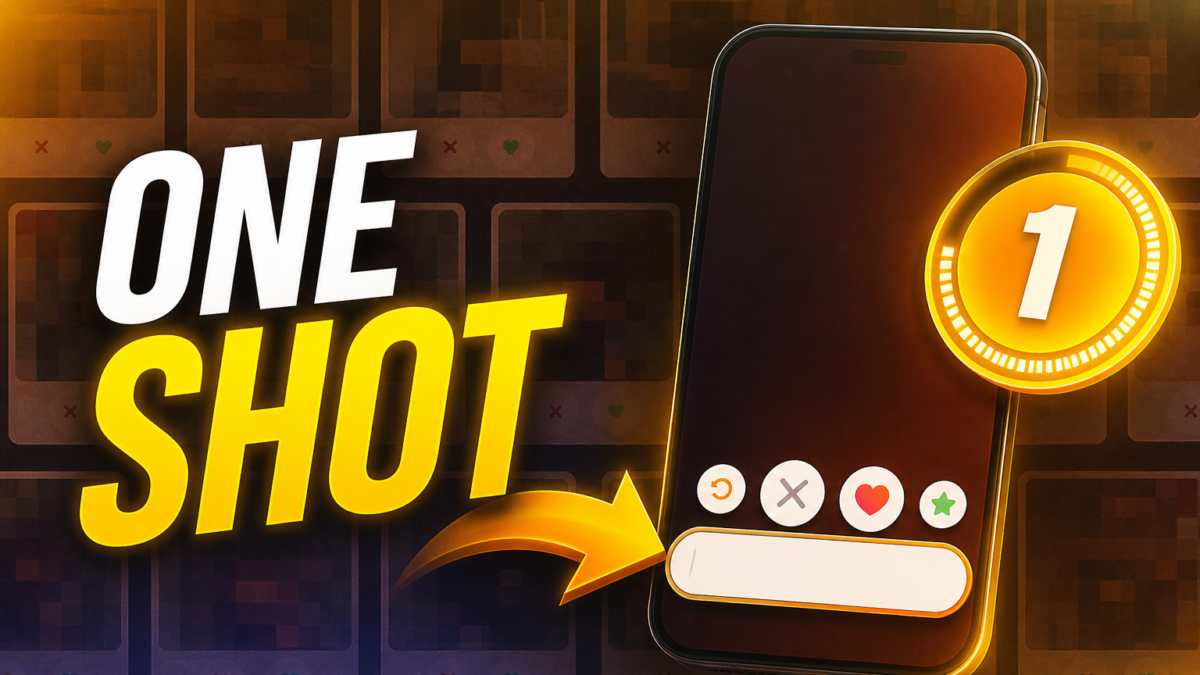
On August 11, Bumble ended the one rule that defined it. After twelve years, matches are no longer locked until a woman speaks first: either person can now send the first message.[1] Along with the change, Bumble extended the response window from 24 hours to 72[1], retired its Opening Moves prompt feature entirely,[7] and quietly rewired the stakes: each person now gets exactly one opening message before the chat unlocks.[7]
Read that last part twice. The new Bumble does not let you warm up with “hey” and figure it out later. You get one shot, she gets one shot, and whoever sends a message first starts the other person’s 72-hour clock.[7] The app even intercepts low-effort attempts: type “hi” or “hey” and Bumble shows a gentle suggestion to make it more personal.[7]
The news cycle covered why Bumble changed. Almost nobody covered what you should actually type now. That is the gap this article fills, and the research is unusually clear.
Why Bumble folded its own flag
Bumble’s numbers left it little choice. Second-quarter revenue fell 15.2% year over year to $210.5 million, paying users dropped 16.4%,[1][2] and the stock is down 92.5% from its IPO price.[4] In the UK, Bumble’s monthly audience shrank from about 1.5 million in 2023 to 1.1 million in 2025 while Hinge held steady.[3] Meanwhile Match Group’s latest results show Tinder’s daily users down 4% while Hinge’s grew 13%: the category is consolidating around apps that never had a women-first rule at all.[5]
The retreat itself took years:
Founder Whitney Wolfe Herd framed the change as fulfillment, not abandonment: “While women making the first move was a radical idea, being women-first was never about prescribing just one way to connect.”[1] Bumble’s internal survey found 66% of women on the app said they prefer men to send the first message, with many citing reduced pressure,[1][3] and company tests showed higher chat initiation and mutual chat rates.[2]
The split reaction is real, and both sides have a point
Users are genuinely divided. The announcement thread on r/Bumble drew roughly 3,800 upvotes and 2,500 comments, with the top reply asking: “What differentiates Bumble from any other app now?”[8] Some women told the BBC they “really valued” the old rule because “any woman who messaged me showed real interest,” while others admitted the frustration that motivated the change: “Honestly, men barely responded when I messaged first.”[3]
“It was kind of like a false sense of protection.”
On the other side, a Los Angeles business manager told WIRED, “I like that it takes off the pressure. Sometimes I just want the men to do the work.”[5] And a Yahoo News piece captured the broader mood shift among younger daters: the era of “I don’t chase, I attract,” and a generation that fears looking cringe more than it fears rejection.[4]
For men, the takeaway is practical rather than political: Bumble used to guarantee you a filter. Now the filter is your opener.
The numbers behind the rule change
Here is the fact that explains everything: on dating apps, men open conversations anyway. A study of roughly 400,000 users, 2 million conversations, and 19 million messages found that men initiated 79% of conversations, and that conversations men started were actually more likely to be reciprocated.[6]
Two more findings from the same study matter for what you type next. First, about half of all initial messages get no reply, so the opener genuinely is a coin flip.[6] Second, when a conversation does get reciprocated, the majority lead to a phone-number exchange within the first 20 messages.[6] Translation: the opening message is not a performance. It is a key that either opens twenty messages of momentum or opens nothing.
The science of the new opening move
Four research findings translate directly to the new one-shot format.
1. Personal beats generic, and now the app enforces it. In a study of relationship initiation on Match, researchers found that initiators who reached a first date used opening messages designed to catalyze conversation, referencing the other person rather than sending greetings into the void.[9] Bumble has now hard-coded the same principle: a bare “hey” triggers an in-app nudge to personalize before you send.[7]
2. Skip the clever line; go direct or innocuous. Decades of pickup-line research converge on one result: women rate direct (“Hi, I’m interested in you”) and innocuous (“What brings you here?”) openers above flippant, canned ones, and men consistently overestimate how well the flippant ones land.[10][11] A Tinder experiment found the same pattern held when the lines were delivered on the app rather than in a bar.[12] On a one-shot system, a line that misses costs you the match. A sincere, specific observation costs you nothing.
3. Humor helps, but only if you can actually produce it. Research on humor as a courtship signal finds a consistent asymmetry: women place the highest value on a partner who produces humor, men on a partner who appreciates theirs. Men participate, women evaluate.[13][14] A genuinely funny one-liner about her profile is an edge. A strained joke is a tax. If comedy is not your natural register, warmth wins.
4. Keep it positive and curious. An analysis of dating messages found that conversations heavy in negative-emotion language were less likely to lead to a first date.[15] No complaints about the app, no “I guess I’ll try this,” no sarcasm about how dating is broken. Your first sentence is not the place to be honest about your Tuesday.
The playbook: anatomy of a one-shot opener
Bumble’s own guidance for the new format is to ask a specific question about her profile, reference a shared interest or photo, or start a small game.[7] The research above suggests a simple three-beat structure that satisfies all of it:
Then the mechanics:
- Use the 72 hours. The window exists to remove pressure, and a thoughtful message sent tomorrow beats a rushed one sent tonight.[1] But do not sit on the clock: the match expires if nobody speaks.[7]
- Check your one allowed edit. You can edit the opening message once within five minutes of sending, and the timer does not reset.[7] Proofread before you send, not after.
- If she opens first, treat her message as your anchor. You still get one opening message. Reply to what she actually said, not what you planned to say.
- Plan for twenty messages. Reciprocated conversations typically exchange numbers inside the first 20 messages.[6] Know where you want to take it (a concrete, low-pressure date idea) before the thread gets there.
What to avoid, with receipts
| Avoid | Why the research says so |
|---|---|
| “Hey” / “Hi” / “hey hey” | Ignored at scale,[6] and Bumble now flags it with an in-app nudge before you send.[7] |
| Flippant or canned pickup lines | Women rate them lowest; men overestimate them most.[10][11][12] |
| Opening with her looks | Generic and low-information; it reads as a line, and lines rate below direct, innocuous openers.[11] |
| Complaints, sarcasm, dating-fatigue talk | Negative-emotion language predicts fewer first dates.[15] |
| A novel | One shot means one clean thought: anchor, take, question. Save depth for the twenty-message window.[6] |
The bottom line
Bumble’s women-first rule never matched how people actually behaved: men were opening 79% of conversations long before August 11.[6] What changed is accountability. The app now hands you the first move, takes away your second chances, and watches your first sentence. The research on what that sentence should contain is old and boring: specific, direct, warm, easy to answer. On the new Bumble, boring is the winning strategy.
Sources
- TechCrunch: Bumble ditches its rule that kept men from making the first move (Aug 11, 2026)
- Mashable: Men will soon be able to message first on Bumble (Aug 6, 2026)
- BBC News: Bumble divides users by ditching its signature ‘women-first’ chat rule (Aug 13, 2026)
- Yahoo News: Bumble wanted women to make the first move. Then the rules of dating changed. (Aug 19, 2026)
- WIRED: Bumble Tried to Change Dating, but the Dating Market Forced It to Change Instead (Aug 20, 2026)
- Zhang, J., & Yasseri, T. (2016). What Happens After You Both Swipe Right: A Statistical Description of Mobile Dating Communications. arXiv:1607.03320
- Bumble Help Center: How conversations start on Bumble (updated Aug 10, 2026)
- r/Bumble: Bumble Fully Ends ‘Women Message First’ Rule (Aug 11, 2026; ~3.8k upvotes, ~2.5k comments)
- Sharabi, L. L., & Dykstra-DeVette, T. A. (2019). From first email to first date: Strategies for initiating relationships in online dating. Journal of Social and Personal Relationships
- Bale, C., Morrison, R., & Caryl, P. G. (2006). Chat-up lines as male sexual displays. Ethology
- Senko, C., & Fyffe, V. (2010). An evolutionary perspective on effective vs. ineffective pick-up lines. The Journal of Social Psychology
- Dai, M., & Robbins, M. L. (2021). Exploring the influences of profile perceptions and different pick-up lines on dating outcomes on Tinder. Computers in Human Behavior
- Bressler, E. R., Martin, R. A., & Balshine, S. (2006). Production and appreciation of humor as sexually selected traits. Evolution and Human Behavior
- Wilbur, C. J., & Campbell, L. (2011). Humor in romantic contexts: Do men participate and women evaluate? Personality and Social Psychology Bulletin
- Huang, S. A., & Hancock, J. T. (2022). Will you go on a date with me? Predicting first dates from linguistic traces in online dating messages. Journal of Language and Social Psychology